

Medical Technology involves lab science, disease diagnostics, research, ethics, and hands-on hospital training that builds students into professionals.
Key Takeaways:
- Mapúa’s MedTech subjects cover lab foundations, diagnostic disciplines, advanced diagnostics, research, professional skills, and clinical internship.
- Diagnostic subjects like Hematology, Bacteriology, Immunology, and Clinical Chemistry train students to detect disease across blood, microorganisms, tissues, and genetic material.
- The program closes with real hospital rotations and structured licensure-exam prep, so students graduate ready for careers in diagnostics, public health, molecular biology, forensics, or health administration.
Are you thinking about a Bachelor of Science in Medical Technology but are not sure what MedTech covers?
This undergraduate program actually covers much more than biology and chemistry. As you progress through your MedTech course subjects, you’ll explore much of how the human body works, how diseases are detected, how laboratory tests are performed, and how scientific findings support patient care.
At Mapúa Malayan Colleges Mindanao, MedTech takes you through lab science, disease detection, research, ethics, and full hospital rotations. Every course builds your skills in reading lab results to guide real diagnoses.
So, what do you study in MedTech? Here’s a closer look at the key areas you’ll encounter throughout the program and how they prepare you for a career in the future.
What Will You Study in Mapúa’s MedTech Program?
A medical technology program brings together several areas of science and professional training. Mapúa’s curriculum structures learning across different categories, including:
- Lab foundations and professional practice
- Diagnostic lab disciplines
- Specialized and advanced diagnostics
- Research and professional growth
- Clinical internship and licensure prep
These areas build on one another as you progress through the program. You start by learning the principles behind safe and effective laboratory practice. From there, you move into specialized subjects.
Let’s take a closer look at Mapúa’s medical technology subjects:
1. Building Your Lab Foundations
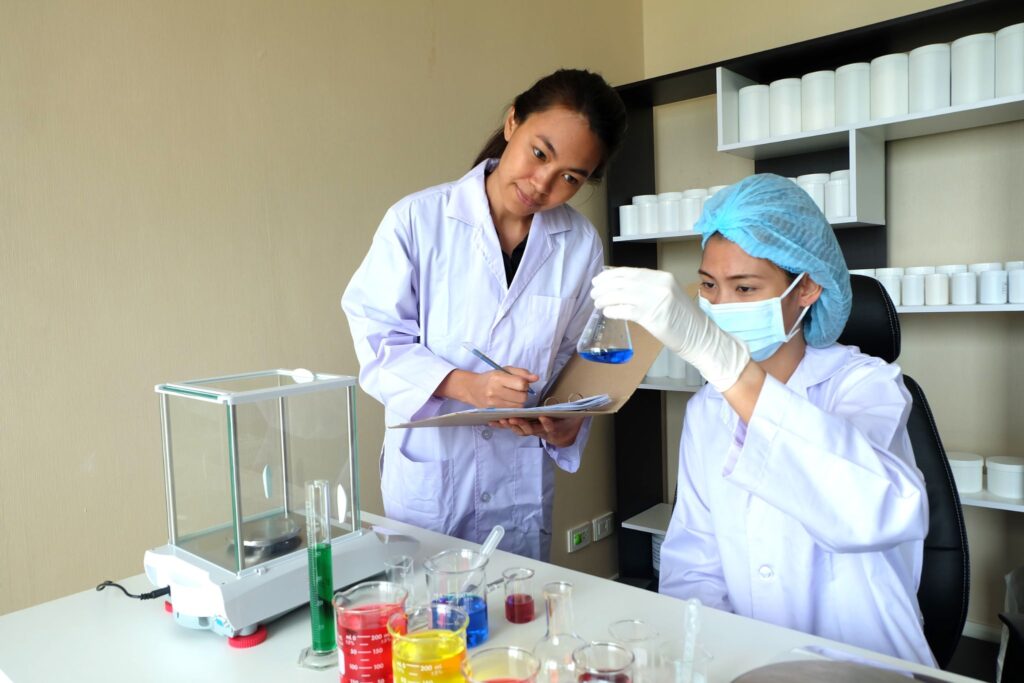
Before you can understand complex diagnostic procedures, you need to know how a medical laboratory works and what it takes to perform laboratory work properly.
Principles of Medical Laboratory Science Practice 1 and 2 cover lab safety, specimen handling, and phlebotomy, which is the skill of drawing blood safely and accurately. You’ll also study Medical Technology Laws and Ethics, where you’ll unpack Republic Act 5527 and the bioethics that guide every test you run.
Meanwhile, Laboratory Management teaches quality control and infection prevention, while Community and Public Health for Med Lab Science connects your lab work to entire communities.
2. Core Diagnostic Subjects
Once you study the foundational subjects in medical technology, you can start exploring different disciplines. This is where many of the subjects you may associate with medical technology come in.
Clinical Chemistry 1 and 2, for example, focus on the analysis of substances and chemical processes in the body. The knowledge you develop here helps you understand how laboratory findings can provide information about a person’s health.
You’ll also study the organisms behind infection. This covers:
- Clinical Bacteriology — isolating bacteria and testing antibiotic resistance
- Clinical Parasitology — identifying parasites common in the Philippines
- Mycology and Virology — fungal and viral pathogens
- Immunology and Serology — how the immune system responds to threats
- Immunohematology — blood typing and transfusion safety
3. Advanced Diagnostics: Tissues, Genes, and Molecules
Beyond blood work, medical technology subjects will also explore tissues and genetic material. Analysis of Urine and Body Fluids covers kidney function and specimens like cerebrospinal fluid. Human Histology teaches you to examine tissue under the microscope, building toward Histopathologic and Cytologic Techniques, where you’ll detect pathological changes firsthand.
Cytogenetics introduces karyotyping, which involves mapping chromosomes to spot genetic abnormalities. Molecular Biology and Diagnostics takes you further, teaching you to analyze DNA and disease biomarkers using today’s most advanced lab tools. These subjects put you at the cutting edge of modern diagnostics.
4. Research, Seminars, and Future-Ready Skills
Being a Medical Technologist involves more than knowing how to perform laboratory tests. You also need to understand how scientific information is gathered, evaluated, communicated, and applied.
Mapúa’s MLS Research Paper Writing courses guide you from proposal to full thesis presentation, building the critical thinking every strong professional needs.
Mapúa also equips you for a tech-driven future through Introduction to AI, Applied Data Science, and Health Information Systems. Add Writing for Academic Studies and Life Coaching, and you graduate ready for both the licensure exam and the real world.
5. Clinical Internship: Where It All Comes Together
After building your knowledge across these different MedTech course subjects, the next step is putting it into practice.
Clinical Internship courses give you an opportunity to apply what you’ve learned in a clinical laboratory setting. This stage helps connect classroom concepts with the workflows, responsibilities, and standards involved in professional laboratory practice.
Instead of simply studying a laboratory procedure in theory, you can begin to understand how your knowledge fits into actual clinical work. You’ll also see how different areas of medical technology work together as part of a larger healthcare system.
Mapúa’s curriculum also includes Medical Technology Assessment Programs, which support your preparation for the licensure examination.
In an actual hospital, these subjects never work alone. Diagnosing one complex illness might pull from Hematology, Bacteriology, Immunology, Clinical Chemistry, and Molecular Diagnostics all at once. This is why the curriculum covers so many areas. You’re building a broader understanding of how laboratory science contributes to healthcare.

Your MedTech Future Starts Here
A degree built on these MedTech subjects doesn’t just teach you science. It builds a foundation for careers in clinical diagnostics, public health, molecular biology, forensic science, and health administration. Mapúa’s curriculum, backed by a global collaboration with Arizona State University®, prepares you to walk into any hospital or lab with the confidence to get the job done.
Ready to see where these subjects can take you? Explore Mapúa’s BS Medical Technology program and start building your future in laboratory science today.
Frequently Asked Questions
What does a medical technologist do?
Medical technologists run lab tests on blood, urine, and other samples to help doctors figure out what’s making a patient unwell. The results and their interpretation will guide diagnosis and treatment.
Do I need to be good at biology or chemistry to take MedTech?
A solid grasp of basic biology and chemistry helps, but you don’t need to be an expert before enrolling because Mapúa’s medical technology subjects build your skills step by step from year one.
What can I do after I graduate from MedTech?
You can work in hospital labs, public health, forensic science, molecular biology, or health administration. However, you’ll need to pass the licensure exam first, which Mapúa will prepare you for.