
Mapúa MCM transforms aspiring students into job-ready practitioners by merging high-level global standards with intensive, hands-on clinical training from the very start of their studies.
The shift from being a student to being a professional nurse is a significant leap. In a hospital, nurses are expected to handle advanced medical technology, make quick and ethical decisions, communicate clearly with diverse teams, and remain calm in high-pressure situations. Beyond nursing skills training, the role calls for emotional strength, accountability, and a deep sense of responsibility for patient safety.
Yet one of the biggest challenges in nursing education is preparing students for what actually happens inside hospitals and communities, not just what appears in textbooks.
At Mapúa Malayan Colleges Mindanao (Mapúa MCM), we are committed to producing nurses who are competent, compassionate, and ready to lead. By combining strong foundational knowledge, advanced simulation, early clinical exposure, and global learning tools, Mapúa MCM ensures that nursing students graduate as confident, competent, and compassionate professionals.
Learning by Doing Through Advanced Nursing Skills Training
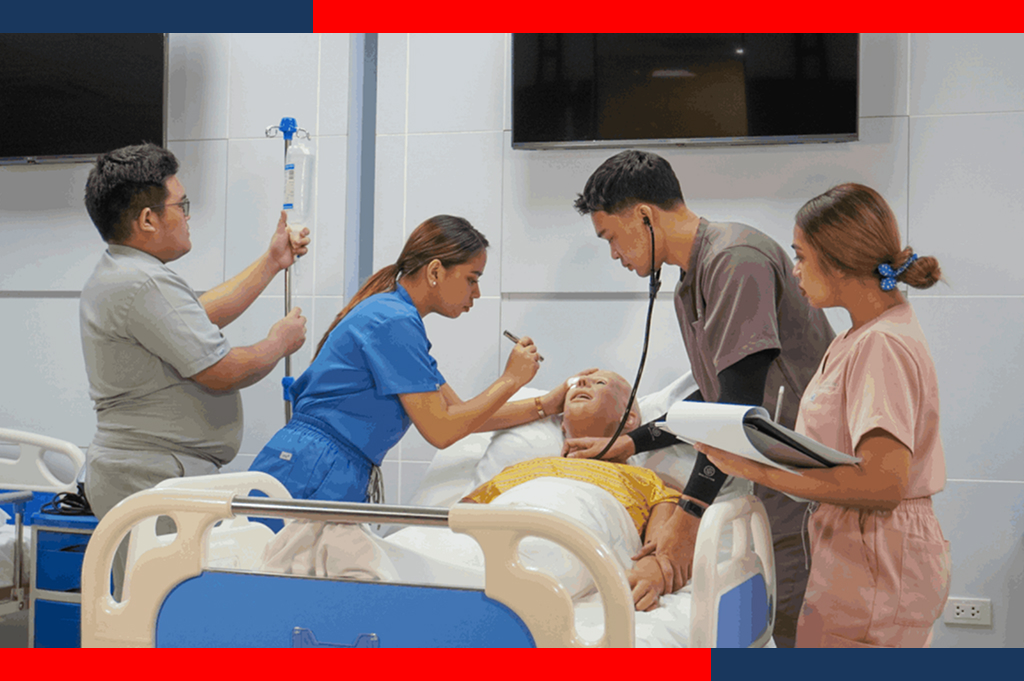
Before students ever step into real hospitals, they spend significant time in Mapúa MCM’s advanced simulation facilities. These spaces are designed to mirror real clinical environments, allowing students to practice the job skills needed in nursing in a safe, controlled setting.
In these simulation centers, students perform procedures, respond to patient scenarios, and experience clinical situations that reflect real-life challenges without the risk of harming actual patients. From basic nursing care to emergency response scenarios, simulation helps students learn through action, not just observation.
What makes this training effective is the focus on problem-solving. Students are not simply told what to do; they are guided through situations where they must think critically, make decisions, and reflect on their performance. Mistakes become learning opportunities, not failures.
Over time, this hands-on practice builds confidence. Tasks like CPR, patient monitoring, and life-support procedures become familiar rather than intimidating. By the time students enter real healthcare settings, they already know how it feels to act under pressure.
Early and Structured Clinical Exposure Through RLE
While simulations are great, nothing replaces the experience of working with real people. This is where the Related Learning Experience (RLE) comes in.
Nursing skills training involves structured laboratory sessions and supervised activities. These sessions allow students to practice patient care techniques across different health scenarios, gradually increasing in complexity as their knowledge grows.
As students advance, they are placed in real healthcare environments through clinical rotation programs. These experiences expose them to both institutional and community-based settings, helping them understand the full scope of nursing work.
Working alongside experienced healthcare professionals, students learn how hospitals actually function—from teamwork and documentation to patient interaction and time management. These real-world experiences are critical in shaping professional behavior, confidence, and accountability.
Developing Both Technical and Human Skills
At Mapúa MCM, equal importance is given to technical competence and interpersonal development.
On the technical side, students undergo nursing skills training of different types of nurses, such as patient assessment, vital sign monitoring, medication administration, wound care, and emergency response. They learn to recognize symptoms, understand treatment plans, and follow safety protocols with accuracy.
Patient safety is at the heart of nursing practice, and Mapúa MCM ensures that students understand this responsibility deeply. The curriculum emphasizes safe, appropriate, and holistic care, looking beyond symptoms to consider the physical, emotional, and social needs of patients. Students are trained to follow evidence-based practices and adhere strictly to safety standards.
But strong nursing care goes beyond procedures. That’s why the program also places strong emphasis on soft skills. Students are trained to communicate clearly and respectfully with patients, families, and healthcare teams. They learn how to explain care plans, listen with empathy, and respond appropriately during stressful moments.
Critical thinking is also developed. Instead of relying solely on instructions, students are encouraged to assess situations, anticipate risks, and adapt when conditions change. Likewise, leadership and teamwork are nurtured, preparing students to function effectively within multidisciplinary healthcare teams.
Finally, ethics and professionalism are woven into every stage of learning. Nursing students are taught to practice within legal frameworks, respect patient rights, and act with integrity at all times. They learn that being a nurse means being accountable—not only for skills, but for decisions and behavior.
Preparing Nurses Who Are Ready to Serve and Lead
The College of Health Sciences at Mapúa MCM is dedicated to developing healthcare professionals who are competent, ethical, and ready to respond to real-world demands. Through outcomes-based education and strong nursing skills training in the Philippines, students are guided toward mastery, not just completion.
The Bachelor of Science in Nursing program is carefully designed to prepare students for the nursing licensure examination and for diverse nursing career paths, including critical care, community health, and public health nursing.
More importantly, the program prepares graduates to serve with confidence, adaptability, and a global perspective—qualities that modern healthcare truly needs.
Are you ready to lead the future of healthcare? Join a community that values excellence, innovation, and compassionate service. Enroll in Mapúa MCM’s Bachelor of Science in Nursing program and gain the real clinical experience needed to thrive in today’s healthcare environment.