

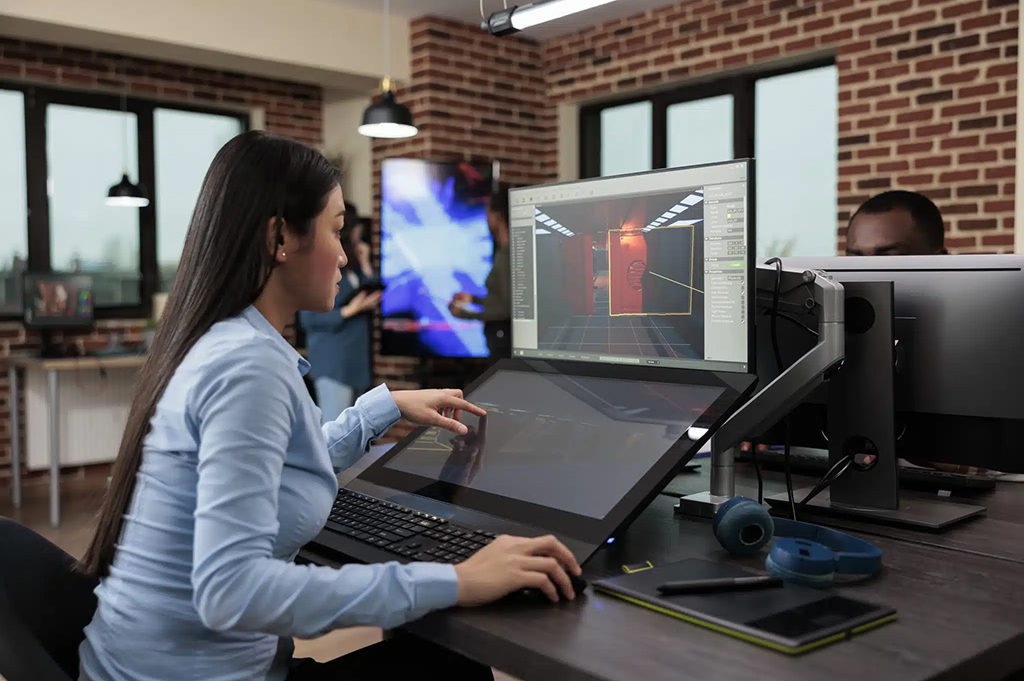
Game development today is not just about having a great idea. It is about knowing how to build that idea into a working, playable experience. This means understanding code, designing engaging mechanics, and testing how real players respond.
Most importantly, it means learning how to work with others, because professional games are built by teams with different roles and strengths.
This is where a strong game development degree matters. It gives you structured training in the key subjects behind modern games and helps you develop the practical skills needed for projects.
Let’s explore what you learn in a game development degree, including the subjects you take, the skills you develop, and the career opportunities available after graduation.
What is a Game Development Degree?
A game development degree is a multidisciplinary program that trains students to design, develop, and produce digital games. It combines computer science, creative design, and multimedia production to help students understand how interactive entertainment systems are built.
For students asking, what degree should I get for game development? The most practical option is a program that integrates programming, design, and multimedia production so you can build games from concept to playable output.
That’s exactly what Mapúa MCM offers through its BS Entertainment and Multimedia Computing program, specializing in Game Development, which prepares students to design, develop, and manage digital games and interactive applications.
Students learn how to transform ideas into playable experiences through coding, storytelling, visual design, and project management. This program also introduces students to tools and technologies used in the gaming industry, allowing them to build a strong technical foundation while exploring their creativity.
In addition to learning how games are made, students gain insight into the entire development process, from concept development and prototyping to production and testing.
Educational Objectives of the Game Development Program
A well-structured game development degree does more than teach technical skills. It aims to produce graduates who can:
Apply modern technologies in entertainment computing
Students learn how to analyze and apply current and emerging technologies to develop innovative IT-based solutions for the entertainment and multimedia industry.
Work effectively in teams and leadership roles
Game development is rarely a solo endeavor. Graduates are trained to collaborate with programmers, designers, and project managers while developing leadership skills to manage development teams.
Commit to lifelong learning
Technology evolves quickly. This program encourages students to continuously update their knowledge and adapt to new tools, platforms, and development frameworks throughout their careers.
Learning Outcomes for Game Development Students
By the end of the program, students are expected to demonstrate several competencies that prepare them for professional game development work. Students will learn how to:
- Apply mathematics, computer science, and contemporary technological knowledge to game development projects
- Use specialized computing knowledge to solve real-world digital entertainment problems
- Analyze project requirements and develop working prototypes
- Design and implement games that meet user needs and technical constraints
- Use modern computing tools and techniques relevant to the gaming industry
- Work effectively in teams and multidisciplinary environments
- Communicate technical ideas clearly through presentations, reports, and documentation
- Understand how computing technologies impact society on both local and global levels
These outcomes ensure that graduates possess the game development skills needed to enter the industry.
Subjects and Skills You Learn in a Game Development Degree
The curriculum of a game development program gradually builds both technical and creative competencies. Below is a simplified overview of the subjects and skills students develop at each stage.
First Year: Building Fundamental Skills
During the first year, students establish a foundation in computing, communication, and basic programming concepts. Key subjects include:
- Introduction to Computing
- Computer Programming
- Human Computer Interaction
- Readings in Philippine History
- Physical Activities Toward Health and Fitness
- Purposive Communication
These courses help students understand how computers work while developing essential academic and communication skills. Programming classes introduce students to logical thinking and coding fundamentals.
Students also begin exploring how humans interact with digital systems through subjects such as Human-Computer Interaction. This knowledge is important for designing intuitive, engaging games.
At this stage, students start developing basic game development skills such as problem-solving, logical thinking, and coding fundamentals.
Second Year: Learning Game Design and Development
In the second year, the curriculum becomes more specialized. Students begin taking subjects directly related to game development and multimedia computing. Examples of a typical game development subject in this stage include:
- Object-Oriented Programming
- Data Structures and Algorithms
- Introduction to Game Design and Development
- Computer Graphics Programming
- Web Programming
- Audio Design and Sound Engineering
- Principles of 2D Animation
Students learn how to design game mechanics, build interactive interfaces, and develop visual assets. Courses in graphics programming and animation help students understand how characters, environments, and visual effects are created.
By the end of the second year, students can create basic game prototypes and interactive applications.
Third Year: Advanced Game Development
The third year focuses on more advanced topics in game design, physics, and programming. Important courses include:
- Game Programming
- Advanced Game Design
- Applied Game Physics
- Artificial Intelligence in Games
- Game Networking
- Game Production
Students gain a deeper understanding of how modern games operate, including gameplay mechanics, artificial intelligence systems, and multiplayer networking.
They also study various types of game engines used to build games efficiently. Game engines serve as the core technology behind modern games, providing tools for rendering graphics, simulating physics, and handling gameplay logic.
By this stage, students collaborate on larger development projects, allowing them to practice teamwork and project management.
Fourth Year: Industry Experience and Capstone Projects
In the final year, students apply everything they have learned through major projects and real-world experience. The curriculum includes:
- Capstone Projects
- Professional Electives
- Practicum or Internship
- Student Global Experience
Capstone projects challenge students to design and develop a complete game or interactive application from concept to final product. These projects often involve collaboration among programmers, artists, and designers.
Meanwhile, internships allow students to work in professional environments where they can apply their technical knowledge and gain practical industry experience.
These experiences prepare graduates to transition smoothly into professional roles after completing their game development degree.
Career Opportunities in Game Development
Graduates of this program have diverse career paths in the gaming and digital media industries. If you are considering a career in game development, the following roles are among the most common opportunities.
Game Developer
Game developers write the code that powers video games. They work on gameplay mechanics, physics systems, and user interaction features that bring a game to life. Developers collaborate closely with designers and artists to ensure the final product functions smoothly and delivers an enjoyable player experience.
UX Designer
User experience designers focus on how players interact with a game. They design menus, interfaces, and gameplay flows that make games intuitive and engaging. UX designers analyze player behavior to improve usability and ensure that the game remains accessible and enjoyable.
Multimedia Designer
Multimedia designers create visual assets such as characters, environments, animations, and interactive elements. They combine artistic creativity with digital tools to produce graphics that enhance the overall gaming experience.
VR Developer
Virtual reality developers build immersive digital environments that allow players to interact with games using VR technology. These professionals use specialized tools and programming frameworks to create realistic and interactive simulations.
Visual Effects Artist
Visual effects artists design explosions, particle effects, lighting effects, and other dynamic elements that enhance the realism and excitement of games. Their work helps make gameplay visually engaging and immersive.
3D Artist or Animator
3D artists and animators create the characters, objects, and environments that players see in a game. They use animation techniques and modeling tools to bring digital worlds to life.
Each of these roles requires a combination of creativity, technical expertise, and collaboration. This is why a structured academic program is valuable for students who want to enter the industry.
You can learn more about industry opportunities by exploring this guide on building a game development career.
Pursue a Degree in Game Development at Mapúa MCM
The gaming industry continues to grow, opening up exciting opportunities for students who want to combine creativity with technology. A game development degree strengthens your technical foundation while helping you develop the creative mindset required in the industry.
Through subjects in programming, animation, and artificial intelligence, you develop practical game development skills that translate into real production work.
If you’re ready to take your interest in gaming and turn it into a future-ready path, the BS Entertainment and Multimedia Computing, specializing in Game Development at Mapúa Malayan Colleges Mindanao, is a strong step forward.
With industry-relevant training, experienced faculty, and an environment that supports hands-on learning, Mapúa MCM helps students prepare for real roles in game and interactive media development.
Kickstart your game development career. Explore the program and enroll in Mapúa MCM today.