

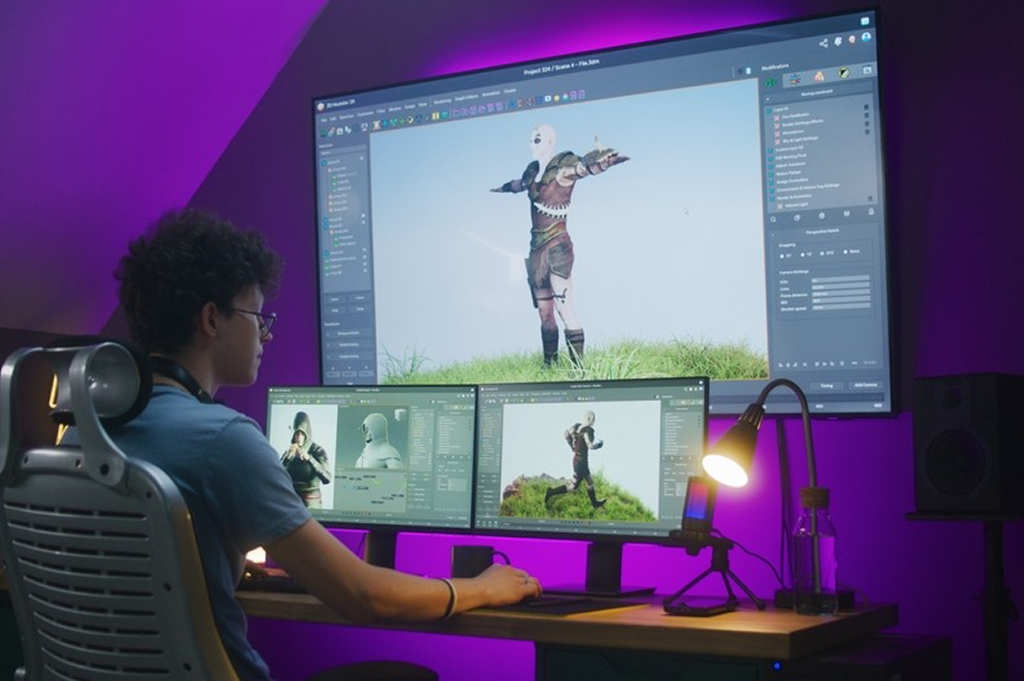
Video games today are more immersive, creative, and technically advanced than ever before. Behind every engaging story, realistic environment, and responsive gameplay lies a powerful set of tools known as game engines.
For students interested in designing video games or exploring interactive digital media, understanding these tools is an essential step toward developing the skills needed in the industry.
Game development is no longer limited to large studios. With the right knowledge and training, students can create their own projects, experiment with different genres, and eventually pursue a professional career in the field.
Learning game engines helps aspiring developers understand how games are built, tested, and optimized across multiple platforms such as PCs, consoles, and mobile devices.
In this guide, we will explore the different types of game engines and why learning them is crucial in modern game development education.
What are Game Engines?
A game engine is a software framework that developers use to design, build, and run video games. Instead of coding every element of a game from scratch, developers use engines that provide ready-made systems for graphics rendering, physics simulation, sound management, animation, and gameplay mechanics.
Game engines simplify development by providing tools for creating 2D and 3D graphics, scripting gameplay behavior, and managing game assets within a unified platform.
It serves as the backbone of a video game, allowing developers to focus on creativity, storytelling, and gameplay rather than rebuilding technical systems.
For students entering game development programs, learning game engines is often one of the first practical skills they develop. It allows them to turn ideas into playable prototypes while understanding the technical aspects behind modern games.
Different Types of Game Engines
Each game engine is designed to support particular development needs. Some engines are optimized for large-scale 3D games, while others focus on 2D development, mobile platforms, or indie projects.
Below are some of the most widely used types of game engines that aspiring developers should become familiar with.
1. Unity
Unity is one of the most popular game engines used by developers and major studios alike. It allows developers to build both 2D and 3D games and to publish games on multiple platforms, including mobile devices, PCs, and gaming consoles.
Many successful games, such as Among Us and Hollow Knight, were created using Unity. Unity’s accessibility and extensive learning resources make it one of the most recommended engines for beginners.
2. Unreal Engine
Unreal Engine, developed by Epic Games, is widely recognized for its high-quality graphics and powerful performance. It is often used for AAA games and cinematic projects.
Games like Fortnite and Gears of War use Unreal Engine to achieve realistic lighting, physics, and visual effects. The engine also features a visual scripting system called Blueprint that allows developers to build gameplay logic without extensive programming knowledge.
Because of its advanced capabilities, Unreal Engine is a valuable tool for students interested in high-end game production.
3. Godot
Godot is an open-source game engine that has gained popularity among indie developers. It supports both 2D and 3D game creation and is known for its lightweight design and flexible scripting language.
One advantage of Godot is its free, open-source nature, which allows developers to modify the engine to meet their needs. This makes it a great platform for experimentation and learning.
4. CryEngine
CryEngine is known for delivering visually stunning environments and realistic physics. It has been used in games such as Crysis, which was famous for pushing the limits of graphics technology.
This engine is particularly useful for developers working on large-scale 3D environments and high-performance graphics.
5. GameMaker Studio
GameMaker Studio is a beginner-friendly engine designed primarily for 2D game development. It allows developers to create games through both drag-and-drop tools and scripting.
Many titles have been created using GameMaker, including Undertale. Its simplicity makes it a good entry point for students who are just starting to explore game engines.
6. Amazon Lumberyard
Amazon Lumberyard is a free game engine developed by Amazon that integrates cloud computing services. It is designed for building multiplayer games and online experiences.
The engine provides built-in support for cloud hosting, which is useful for developers building large-scale multiplayer systems.
7. Construct
Construct is a browser-based engine focused on 2D game development. It allows developers to create games without writing code by using visual programming tools.
Because of its ease of use, Construct is often used in educational settings where students are learning the fundamentals of game design.
8. RPG Maker
RPG Maker is specifically designed for creating role-playing games. It includes built-in assets, maps, and characters that allow developers to build story-driven games quickly.
Many independent developers use RPG Maker to prototype ideas or create narrative-driven experiences.
9. Cocos2d
Cocos2d is a lightweight open-source engine commonly used for mobile games. It is especially popular among developers building 2D mobile games for Android and iOS platforms.
Its efficient performance and flexibility make it a strong option for developers working on mobile-focused projects.
10. Phaser
Phaser is a JavaScript and HTML5 framework for browser-based games. It is widely used to create web games that run directly in web browsers.
This engine is particularly useful for developers interested in interactive web experiences and educational games.
The Importance of Learning Game Engines for Game Development Students
For students interested in video game creation, learning game engines is more than just understanding software tools. It is about building the technical and creative foundation required in the gaming industry.
Turning Ideas Into Playable Experiences
Game engines enable students to turn ideas into working prototypes quickly. Instead of writing thousands of lines of code from scratch, they can focus on designing gameplay mechanics and testing concepts.
Learning Core Game Development Skills
Working with engines helps students learn essential development concepts such as:
- physics simulation
- game mechanics
- animation systems
- level design
- asset integration
These skills are necessary for building modern interactive experiences.
Preparing for Industry Tools
Many professional game studios use engines such as Unity and Unreal. By learning these platforms during college, students gain familiarity with the same tools used by industry professionals.
Supporting Cross-Platform Development
Modern games are released across multiple devices, including smartphones, PCs, consoles, and even virtual reality systems. Game engines simplify deploying games across different platforms.
Building a Strong Portfolio
Students who learn different types of game engines can build projects that showcase their creativity and technical skills. These projects become part of a portfolio that can help them pursue a career in game development.
5 Tips on How to Choose the Right Game Engine for Your Project
Because there are many types of game engines, selecting the right one can be challenging for beginners. Here are some tips to help students decide which engine to use.
1. Consider the Type of Game You Want to Build
Different engines are suited for different genres. For example:
- Unity works well for both 2D and 3D games
- Unreal Engine is ideal for high-end graphics
- GameMaker Studio is strong for 2D indie games
Understanding the type of game you want to develop can help narrow down your options.
2. Evaluate Your Programming Skills
Some engines require strong programming knowledge, while others offer visual scripting tools.
Beginners may find engines such as Construct or GameMaker easier to learn, while more experienced programmers may prefer engines such as Unity or Unreal.
3. Think About Target Platforms
Consider where your game will be played. Some engines are optimized for mobile development, while others are better suited for PC or console games.
Choosing an engine that supports your target platform can save development time and effort.
4. Look at Community Support
Popular engines often have large communities that provide tutorials, documentation, and troubleshooting advice. This support network can be extremely valuable to students learning independently.
5. Experiment and Learn
The best way to understand game engines is through hands-on experimentation. Students should try multiple engines and explore their features to find the one that best matches their goals.
Kickstart Your Future in Game Development
The video game industry continues to grow rapidly, creating new opportunities for artists, programmers, and designers. Behind every successful game is a powerful engine that helps developers bring their ideas to life.
For students who want to turn their passion for games into a profession, formal education can provide the guidance, technical training, and mentorship needed to succeed.
If you are ready to explore the world of game development, consider taking the next step by discovering Mapúa MCM’s undergraduate programs.
Programs such as the BS Entertainment and Multimedia Computing prepare students to explore these tools while learning game design, animation, and programming.
Learn how you can build the skills needed to create the next generation of digital experiences. Enroll now at Mapúa Malayan Colleges Mindanao.