

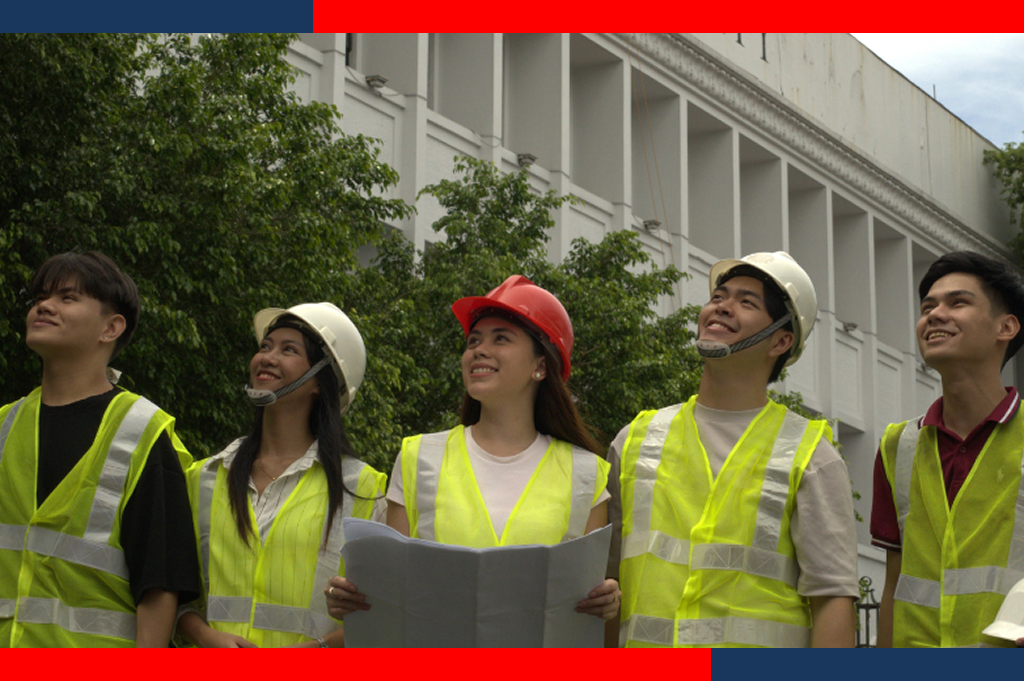
At Mapúa Malayan Colleges Mindanao (Mapúa MCM), world-class engineering education is taking shape—rooted in global standards, strengthened by industry relevance, and delivered right in the heart of Davao.
Today, world-class engineering education is no longer defined by location alone. Instead, it is measured by clear standards: the quality of teaching, the relevance of the curriculum, access to modern tools, strong industry connections, and graduates who can compete and collaborate on a global scale.
In the heart of Davao, Mapúa Malayan Colleges Mindanao (MCM) is reshaping what’s possible in engineering education. As an engineering and architecture school in Mindanao, Mapúa MCM brings the same rigorous academic frameworks, outcomes-based education, and professional benchmarks used by leading institutions worldwide.
What Does A World-Class Engineering Education Actually Mean?
To understand what makes an engineering education truly world-class, it helps to look at global benchmarks and how Mapúa MCM meets each one.
1. Standards That Match the Rest of the World
One of the most important things to look for in engineering training is its alignment with international benchmarks, such as those set by the Accreditation Board for Engineering and Technology (ABET). These standards ensure that what students are learning is relevant to the global industry.
Mapúa MCM uses an Outcomes-Based Education (OBE) approach. Instead of simply asking students to sit through hours of lectures and pass a written test, we focus on what students can actually build, design, and solve. Courses are carefully structured to ensure that students develop strong foundations in math, science, and engineering principles while also gaining practical, problem-solving skills aligned with global standards.
For example, students in BS Chemical Engineering develop deep expertise in engineering sciences that apply to global chemical, manufacturing, and energy industries. Meanwhile, BS Architecture students move beyond theory by connecting design concepts with real-world practice—preparing them for professional environments that demand both creativity and technical precision.
This balance between theory and application ensures graduates are not just academically prepared, but professionally ready.
2. Mentors Who Guide, Not Just Lecture
In world-class engineering institutions, faculty members are more than lecturers. They are mentors who challenge students, guide growth, and model lifelong learning. The best educators create environments where curiosity is encouraged, and standards are high.
At Mapúa MCM, students learn under the guidance of faculty members who bring both academic depth and professional insight into the classroom. Instructors closely monitor individual student progress, provide constructive feedback, and support both academic and personal development.
This personalized mentorship helps students achieve their personal goals while meeting professional standards. It turns graduates into leaders who are socially responsible and focused on getting results.
3. State-of-the-Art Facilities and Hands-On Learning
To provide world-class engineering education, a school must invest in the same hardware and software used by actual engineering companies.
Mapúa MCM invests in high-end laboratories and modern equipment designed to support experiential learning. These facilities allow students to test theories, build prototypes, and analyze real systems, turning concepts into practical understanding.
Across programs, learning is active, immersive, and grounded in real-world practice. For instance, Mechanical Engineering students work with systems related to power generation, robotics, and aerospace concepts. Electrical Engineering students gain hands-on experience using modern tools and laboratory equipment essential for today’s energy and power industries.
4. Holistic Learning and Career Readiness
A world-class engineer is not only technically capable but also adaptable, ethical, and aware of real-world constraints. Employers look for graduates who can solve complex problems while considering economic, environmental, and social factors.
Across all Mapúa MCM programs, students are trained to analyze problems within actual conditions. Projects and assessments require them to think critically, collaborate effectively, and make responsible decisions.
Mapúa MCM graduates are prepared for a wide range of careers in engineering, including Systems Developers, Urban Planners, Project Engineers, Petroleum Engineers, and Technology Specialists. These outcomes reflect not just academic achievement, but true readiness for the global engineering workforce.
Take the Lead in Your Engineering Career with World-Class Learning
The College of Engineering and Architecture at Mapúa MCM serves as a hub for innovation, research, and professional development. By committing to innovative research, industry-aligned instruction, and outcomes-based education, Mapúa MCM ensures that students are prepared for both local challenges and international opportunities.
Ready to build a global engineering career right from Mindanao? Explore the engineering programs in college at Mapúa MCM and experience an education that prepares you for real-world impact.