
Many college students face the same challenge after graduation: feeling technically qualified, yet unprepared for actual industry work. This disconnect, also known as a skills gap, can come from how fast technology evolves compared to how slowly traditional curricula used to change.
Today, that gap is no longer acceptable. Employers expect graduates who can contribute from day one—professionals who understand not only theories, but also systems, workflows, tools, and teamwork. As a result, engineering training schools are reshaping how they teach, shifting away from purely lecture-based learning toward practice-driven, industry-aligned education.
At Mapúa Malayan Colleges Mindanao (Mapúa MCM), we see this change as a way to empower students. As an engineering and architecture school in Mindanao, we train students to lead a team, solve a crisis, and build the future of Mindanao and beyond.
Engineering Training Beyond the Textbook
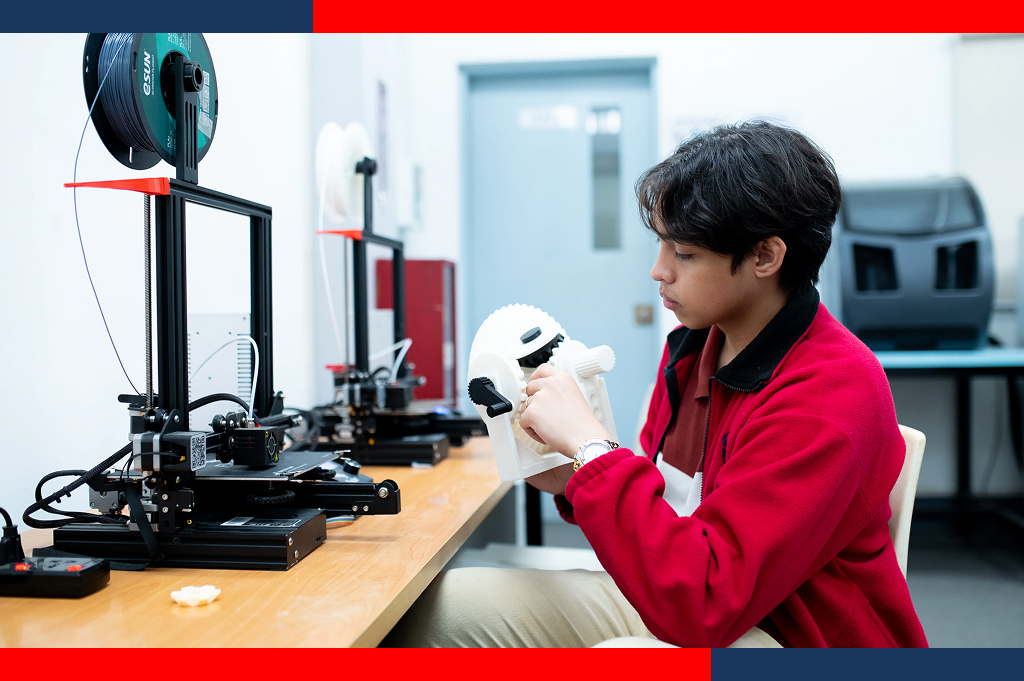
The first step in closing the gap is getting students out of their seats and into the lab. While textbooks and lectures provide essential foundations, real understanding happens when students apply concepts to tangible problems.
Immersing in Learning Environments
Modern engineering classrooms increasingly resemble professional workspaces. Instead of passive lecture halls, students learn in laboratories, simulation rooms, and design studios equipped with industry-grade software and equipment. Tools such as AutoCAD, MATLAB, SolidWorks, and circuit simulation platforms allow students to visualize designs, test assumptions, and refine solutions in real time.
Applying Theory to Practice
It’s one thing to calculate the load a beam can carry on a piece of paper; it is another thing entirely to see a physical model bend or break under pressure. By integrating labs and workshops into every part of the study, students learn the actual physics of the job. This constant connection between theory and application helps students see why concepts matter, not just how to solve equations.
Using Modern Tools
Engineering training schools also integrate advanced technologies. AI-powered analysis tools, machine learning models, and simulation software are now used to predict system behavior, identify stress points, or simulate environmental impacts such as earthquakes or energy loads. These tools mirror what engineers use in the field, making learning both relevant and practical.
Learning by Doing: Projects and Teamwork
In the real world, an engineer rarely works alone in a room. They are part of a team that includes designers, programmers, and project managers. This is why Project-Based Learning (PBL) has also become so vital.
Working Across Fields
In many engineering programs, students stay within their own department. But at a school like Mapúa MCM, we encourage interdisciplinary teams. For example, a Mechanical Engineering student can work with a Computer Engineering student to build a specialized robot for a local farm. This mimics a real-world consulting team. Students learn how to speak the language of other experts and how to coordinate to meet a single goal.
Flipping the Traditional Classroom
The way we spend time in class is also changing. Instead of listening to a long lecture for two hours, students often study the foundational concepts on their own time. Class time is then saved for the hard part: designing, testing, and fixing problems. This approach turns classrooms into active learning spaces where students ask questions, test ideas, and receive immediate feedback from instructors.
Internships and Industry Partnerships
No classroom experience can fully replace exposure to real workplaces. That is why internships and industry partnerships are essential to how engineering schools prepare students for work.
Experiencing the Industry Directly
Through collaborations with engineering firms, construction companies, manufacturing plants, and technology providers, students gain opportunities to work on actual projects. Internships allow them to experience professional expectations, deadlines, safety standards, and workplace dynamics firsthand.
Understanding Market Expectations
Working alongside professionals helps students understand current industry standards, including digital workflows, Industry 4.0 practices, and quality requirements. This exposure sharpens their skills and gives them clarity about roles, specializations, and in-demand engineering careers.
Improving Curricula Continuously
Strong partnerships also benefit schools. Industry feedback helps academic institutions adjust course content, update tools, and refine learning outcomes, ensuring that what students learn remains aligned with real market needs.
A Curriculum Designed for Success
At the core of engineering training at Mapúa MCM is Outcomes-Based Education (OBE). Rather than focusing only on what is taught, modern programs define what students should be able to do by graduation. These competencies include technical mastery, problem-solving ability, teamwork, and ethical responsibility—qualities employers actively seek.
Integrating New Tech
At Mapúa MCM’s engineering training school, we weave technology like AI, the Internet of Things (IoT), and data analytics into every discipline. This ensures students will learn how digital tools make their work more accurate and efficient.
Developing Professional Skills
Being a great engineer also means being a great communicator. A project can be technically perfect, but if it can’t be explained to a client or a community leader, it might never get built. At Mapúa, we emphasize project management, ethics, and communication. We want to produce well-rounded leaders who are as good with people as they are with machines.
Engineering Excellence at Mapúa MCM
At Mapúa Malayan Colleges Mindanao (Mapúa MCM), education is built around real-world readiness. As one of the top engineering training schools in Davao, Mapúa MCM’s College of Engineering and Architecture is committed to producing globally competitive, socially responsible, and results-driven professionals.
Through outcomes-based education and a learner-centered approach, Mapúa MCM ensures that students meet both local and international standards—equipping them with the skills, mindset, and confidence to thrive in industry from day one.
Ready to turn classroom learning into real-world impact? Enroll at Mapúa MCM and see how we can help you turn your passion for science and math into a high-impact career.